Who can help me embed AI into my existing ERP and operations?
Someone who keeps the numbers deterministic and lets AI do interpretation only. I build systems that move teams from "what happened?" to "what should we do next?" — business logic computes the figures and stays auditable, while AI explains cause, prioritizes exceptions, and guides the next action inside the workflow people already use.
Decision Intelligence & Applied AI
I build systems that help teams move from “what happened?” to “what should we do next?”
That means combining deterministic business logic with AI-assisted interpretation, recommendations, summaries, and workflow guidance. The numbers stay auditable. AI helps explain, prioritize, and guide action.
What working on this looks like
The same path every time, scoped to what this work actually needs.
- 01
Understand the Mess
We start with the real operating pain: where work gets stuck, where data breaks, where teams lose visibility, and where decisions are harder than they should be.
- 02
Map the System
I translate the business process into workflows, data models, rules, roles, integrations, and decision points. This is where we separate what should be automated, what should be calculated, what needs human judgment, and where AI can actually help.
- 03
Build the Operating Layer
I design and lead the build using the right tools for the job: low-code platforms, databases, dashboards, automations, AI workflows, or custom development when needed. For complex builds, I bring in trusted technical specialists while owning the product architecture and delivery.
- 05
Measure the Outcome
The goal is not software for its own sake. The goal is better visibility, fewer manual steps, faster decisions, stronger margins, cleaner reporting, and systems that scale with the business.
Systems where this has already shipped
MISH
MISH Sales & Margin Intelligence
How do you find margin leakage hiding inside ERP data?
Read the case studyBrainMate
BrainMate / BrainMesh OS
How do you govern AI memory and spend across multiple AI tools?
Read the case studySales Ops
Sales Ops Dashboard
How do you automate a manual management reporting pack?
Read the case studyCommon questions about this work
How do you use AI in these systems?
Deterministic business logic first, AI where judgment genuinely helps. Numbers, rules, and thresholds stay auditable and reproducible; AI is used to interpret, prioritize, summarize, and guide action on top of them. Every AI surface is grounded in the company's own data and keeps a human in the loop where the decision matters.
What is AI governance and why does it matter?
Governance is the layer that decides what an AI system is allowed to see and say: policy evaluation, guardrails, retrieval scoping, PII scanning, grounding verification, audit logging, and rate and cost controls. Without it, an assistant is a liability; with it, it is an operating tool. BrainMate is the platform where Alex built this layer.
Can I talk to the chatbot on this site instead?
Yes. The BrainMate Chatbot on this site answers questions about these projects and how Alex works, grounded in the public case studies, and it runs on the same governed BrainMate platform described in the case files.
More answers on cost, scope, and method on the FAQ page.

Follow Me
LinkedInResume
Download PDF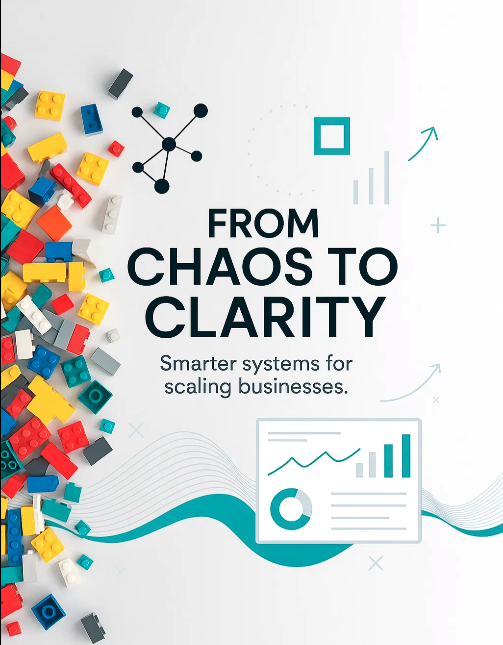
From Chaos to Clarity
Get insights on product management and operations delivered to your inbox.
Subscribe on LinkedIn